
- Regulate
- Recover
- Adapt
Build psychological fitness for family life.
Life will bring pressure, change, strong emotions and things we cannot control. Psychological fitness is the capacity to regulate, recover and adapt — and it is something we can develop.

Pull up a chair
I'm Lucy — Psychological Fitness Nana. I've spent more than twenty years helping children, parents and schools build the skills that help us meet life well.
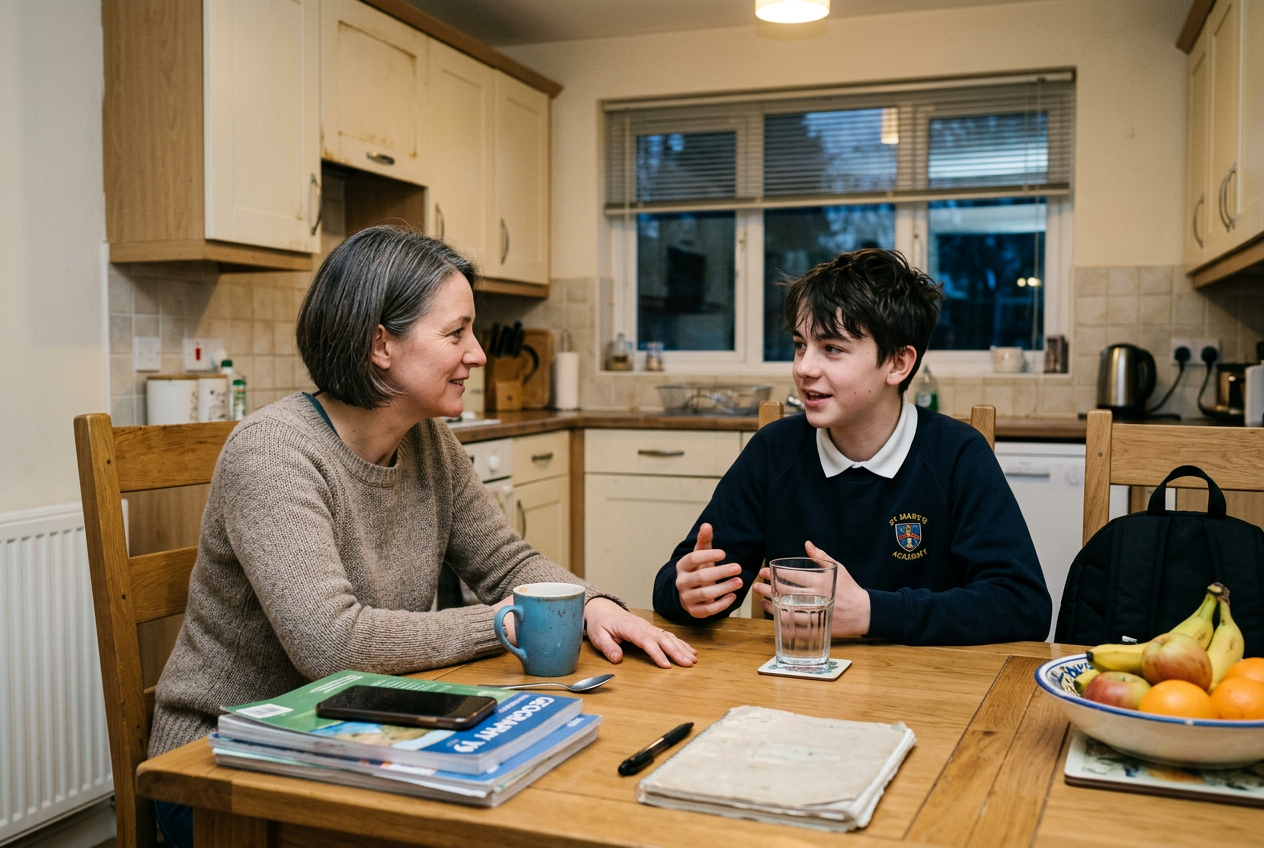
Pull up a chair
Parenting was never meant to be about perfect responses.
We all lose our patience. We get things wrong. Life catches us off guard. Our children face things we cannot fix for them.
Psychological fitness is about building the capacity to regulate, recover and adapt — and helping our children build that capacity too.
So pull up a chair. This is where we talk honestly about what that looks like in real family life.
Here you can choose a practical pathway for your family, or start with my free videos on YouTube.
The capacity to regulate, recover and adapt.
Regulate
Understand and manage what is happening inside us.
Recover
Find our way back after difficulty, setbacks or strong emotion.
Adapt
Respond flexibly when life, relationships or circumstances change.
- It doesn't mean staying calm all the time.
- It doesn't mean avoiding difficult feelings.
- And it certainly doesn't mean getting parenting right every time.
It means having skills we can practise and strengthen over time.
Children learn psychological fitness in the lives they live
Children don't develop these capacities in isolation. The adults around them matter.
- 1How we respond when plans go wrong.
- 2How we handle disagreement.
- 3How we recover after a difficult day.
- 4How we talk about mistakes.
- 5How we reconnect after getting something wrong.
All of this becomes part of the environment in which children learn.
We are part of their lived classroom.
Developing our own psychological fitness isn't about becoming a perfect parent. It's about giving ourselves more capacity — and giving our children more opportunities to develop theirs.

Choose where you want to start
Every family is different. You don't need to learn everything at once. Choose the pathway that feels most useful for what is happening in your family now.
Better Prepared
£10
Build the everyday psychological fitness that supports children to understand emotions, think flexibly, regulate, recover, adapt and find constructive ways forward.
Includes community access
The Resilience Pathway
£10
Explore the deeper psychological thinking and foundations of mental resilience and emotional wellbeing.
Includes community access
The Transitions Pathway
£10
Support your child through big changes and growing up. Build adaptability and inner security so they meet new chapters feeling capable and supported.
Includes community access
The Anxiety Pathway
£10
Understand the nervous system and calm the chaos. Gain tools to respond with confidence, helping your child move through anxiety rather than fighting it.
Includes community access
Everything — every pathway, one price
Not sure where to start, or want it all? Get every pathway — including future pathways as they are developed — plus the parent community.
- All four pathways
- Future pathways as they are added
- The Healthy Minds for Parents community
Future pathways are added as they are developed. Every pathway includes access to the Healthy Minds for Parents community, so you have somewhere safe and kind to continue the conversation, ask questions and keep practising what you are learning.
You don't have to do the pathway alone
When you choose a Healthy Minds pathway, you also join our private parent community. It is a safe, kind space to learn, ask questions, share the ordinary realities of family life and keep building psychological fitness over time.
- A safe, kind space
- Ask questions and share real family life
- Keep building psychological fitness over time
Your pathway gives you the structure. The community gives you somewhere to keep the conversation going.
Not ready for a pathway? Start here for free.
I share practical Psychological Fitness Nana videos on YouTube every week — from understanding emotions and beliefs to connection, teenagers, stress, stillness and resilience.
They are free, and they will stay free.
When you're ready to go deeper, come back here and choose a pathway to work through in your own time.
You're not the only house with a light on.
Connection
“My teenager barely talks to me anymore.”
Pressure / worry
“I don't know whether to push or back off.”
Conflict
“Everything seems to turn into an argument.”
Different family. Different situation.
But underneath many of these moments are the same capacities: regulation, recovery, flexible thinking, connection and adaptation.
Family life has changed. The skills still matter.
Childhood and parenting are happening in a faster, more connected and often more demanding world. We cannot remove every pressure or make life predictable. We can help children — and ourselves — develop the capacities to meet it.
The three principles
- 01
Regulate Yourself First
- 02
Connection Before Correction
- 03
Build Together
REGULATE • RECOVER • ADAPT
The five daily habits
- Notice One Belief
- Name That Feeling
- Practise Stillness
- Reach Out & Connect
- Name the Good Stuff

- Routledge Published Author
- LSE Research Partner
- 20+ Years of Practice
Meet Lucy — Psychological Fitness Nana
I've spent more than twenty years working alongside children, parents, schools and researchers to understand what helps people build resilience and psychological fitness.
I'm also a mum, a nana and someone who knows that family life rarely looks as tidy as the theory.
Read Lucy's full story →Built on 20+ years of evidence.
Is this pathway for someone like me?
Hear from parents who started where you might be now.
I found the WoBbLe framework the night after downloading the worksheet — and for the first time in months, I had something I could actually do to help my daughter. Not wait. Do.
Mum of a 16-year-old, London
Frequently Asked Questions
Everything you need to know before you start. Answered simply and honestly.
Start where you are.
You don't need to fix everything.
You don't need to know everything.
And you certainly don't need to be a perfect parent.
Choose the pathway that feels useful now — or pull up a chair and start with Nana's free videos.
This is psychological fitness. — Psychological Fitness Nana